When Does an Accumulation Become a Collection?
A collection is not defined by quantity alone. It begins when someone recognizes a relationship among things—and decides that relationship is worth attending to.
By Akurium
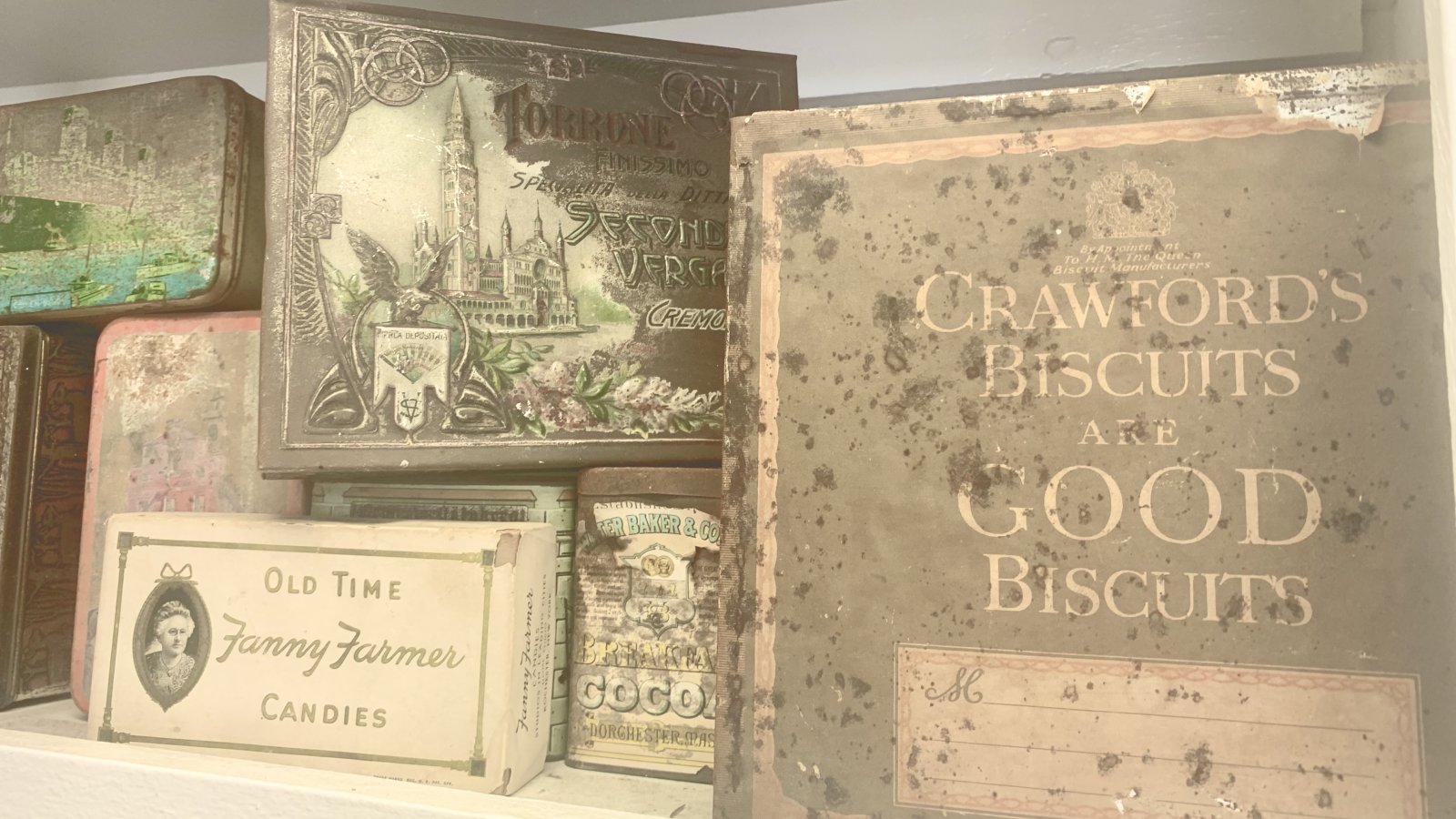
One object is an object. Two are a pair. Three, according to one bit of collector folklore, make a collection.
It is a pleasing rule. It is also easy to break.
Three unrelated receipts left in a coat pocket do not ordinarily become a receipt collection. Two letters kept together because they are the only surviving correspondence from a grandparent might carry all the coherence and significance of one.
Quantity tells us how many things are present. It does not tell us what those things have become together.
So when does an accumulation become a collection?
The answer may have less to do with reaching a particular number than with recognizing a relationship. At some point, someone sees that these things belong together—not necessarily by nature, but by intention, history, resemblance, use, or personal meaning. The objects begin to form a set, and the set begins to ask for attention.
More than having several of something
Most homes contain accidental concentrations.
There are mugs in a cupboard, books beside a bed, cables in a drawer, and containers full of hardware whose original purposes have become uncertain. These groups may be useful, disorderly, or surprisingly large. They are not automatically collections.
Yet any one of them could become one.
The mugs might document independent potters working in a particular region. The cables might trace the changing connections used by thirty years of personal computers. The hardware might have been carefully removed from furniture repaired by one cabinetmaker.
Nothing about the objects themselves settles the question. The distinction emerges from the relationship someone perceives among them.
Early scholarship on collecting has often emphasized this quality of relatedness and selectivity. Researchers have distinguished collectors from indiscriminate accumulators partly by the collector’s recognition of an interconnected set. They have also found that collections do not always begin intentionally; sometimes people recognize the collection only after its materials have gathered around them.
That seems true to experience. Many collectors can point to a first object, but fewer can identify the exact moment when possession became collecting.
Intention sometimes arrives late
Some collections begin with a plan.
A person decides to acquire one example of every camera made by a particular company, every edition of a book, or ceramics from a specific workshop. The boundary exists before most of the objects enter it. Each acquisition can be tested against a rule.
Other collections begin sideways.
A gift is joined by another gift. A useful object is replaced but not discarded. Something found at a flea market resembles something already at home. Years later, a pattern becomes visible.
“I never meant to collect these” is not a contradiction. It is one of collecting’s most familiar origin stories.
The collector may have been making choices long before recognizing those choices as a practice. They kept this object instead of discarding it. They noticed another from the same maker. They began looking more closely at variations. Recognition did not create the earlier objects, but it changed the relationship among them.
A scattered accumulation became legible.
A collection has a boundary
Once a collection is recognized, a second question follows: what belongs?
This is where collecting becomes selective.
A person who collects postcards may exclude unused cards, reproductions, or examples outside a particular period. Another postcard collector may welcome all three. Neither has misunderstood postcards. They are building different collections.
The boundary may depend on material facts:
- Made before 1950
- Produced by one manufacturer
- Found within a particular region
- Constructed from a certain material
It may instead depend on experience:
- Used by a family member
- Acquired during travel
- Connected to a former workplace
- Remembered from childhood
Most boundaries mix the two.
They also change. A narrow collecting interest can expand when the collector discovers an overlooked relationship. A broad collection can become more focused as knowledge grows. Exceptions can expose rules no one realized were present.
The act of refusing an object can be as revealing as accepting one. “That is interesting, but it does not belong here” is a sentence through which a collection defines itself.
Arrangement makes an argument
Imagine 20 objects placed on a table.
Arrange them by date, and they tell a story of change. Arrange them by color, and visual relationships become prominent. Group them by maker, place of origin, material, previous owner, or condition, and each arrangement produces a different understanding.
The objects have not changed. The question asked of them has.
This is why organization is never entirely neutral. Every catalog, display, shelf, and storage box emphasizes some relationships while making others less visible. Classification does not merely tidy a collection after the interesting work is done. It is one of the ways the collector thinks.
Even an apparently disorganized collection may contain an arrangement its keeper understands perfectly.
“That pile is the examples I still need to identify.”
“This box came from my uncle’s workshop.”
“Those are together because I want to compare their marks.”
The system may be temporary, private, or difficult for someone else to interpret. It is still evidence of relationships being maintained.
A name brings the collection into view
Naming a collection gives its boundary language.
“My records” describes possessions. “Independent jazz labels from Chicago” suggests a field of attention. “Things from my father’s desk” creates a group through provenance and memory rather than object type.
A name does not need to sound institutional. It needs only to help the collector recover the connecting thought.
Naming also has risks. A label chosen too early can make a collection seem more settled than it is. Objects at the edges may be excluded because they trouble the title, even when that trouble is interesting.
Provisional names are allowed.
A collection can be called “probably railroad hardware,” “unidentified family photographs,” or simply “things I keep finding with this symbol.” Uncertainty does not prevent a collection from existing. Sometimes uncertainty is what holds it together.
Use does not disqualify an object
Collections are often imagined as things withdrawn from ordinary life: stamps never mailed, toys left in their packaging, dishes no longer used.
Some collections work that way. Others remain active.
A record can be played. A camera can still take photographs. A tool can return to the workbench. A mug can carry coffee every morning while also belonging to a considered group of studio pottery.
Use and collecting are not opposites.
The more useful question is whether the object carries significance within the set beyond its immediate function. The mug is not interchangeable with any vessel that holds the same amount. Its maker, form, history, or relationship to the others matters.
That additional significance may be scholarly, aesthetic, historical, or entirely personal. It does not need to be legible to the market.
A collection does not require permission
Museums establish acquisition policies, collection scopes, and documentation standards because they have responsibilities to the public, their missions, and future custodians. Scientific collections preserve associated data because the information may be as important as the specimen itself. The Smithsonian describes a collection as a storehouse of information whose objects can support new questions as knowledge changes.
Private collectors operate under different obligations.
A personal collection need not be comprehensive, formally cataloged, publicly displayed, or recognized by an authority. It need not contain rare objects. It does not become more authentic when someone assigns it a high price.
A collection can exist in one cabinet and matter to one person.
What makes it a collection is not outside validation but sustained recognition: these things are connected, the connection matters, and someone is willing to keep attending to it.
The connecting sentence
Perhaps the best test is not numerical but grammatical.
Complete this sentence:
I keep these together because…
The answer might concern history, design, memory, variation, usefulness, curiosity, or delight. It might still be uncertain.
“I think they were made by the same company.”
“They show how the design changed.”
“They belonged to people in my family.”
“I have not figured out why I keep noticing them.”
Even the last answer contains the beginning of a collection. Attention has found a pattern before language has fully caught up.
One object may be enough to suggest that pattern. A hundred may fail to produce it. The threshold is not the arrival of the third thing but the arrival of a relationship someone decides is worth preserving.
An accumulation becomes a collection when its contents stop being merely adjacent and begin to be understood together.
Suggested further reading
- Belk, Wallendorf, Sherry, Holbrook, and Roberts’ foundational paper, “Collectors and Collecting”, distinguishes collecting from related forms of accumulation and discusses collections that begin without conscious intent.
- The Smithsonian National Museum of Natural History’s “Collecting Natural History” demonstrates how relationships among objects allow collections to answer questions that isolated objects cannot.